Orkut, social media success or failure?

Case Study: Orkut
Pamela Ten Eyck
SNHU MKT 555

Orkut!  Have you ever heard of it?  Here is a bit of background—Orkut was a social media platform created by a Google employee named Orkut Buyukkokten. It was wildly successful in Brazil, and was available from 2004 – 2014 as an invite only platform.

Being created by Google, Orkut was a trusted platform and was widely utilized within the technology community. The Orkut platform was clean and simple, giving users the ability to connect with friends and digital communities, and rate products and services. Within a year of its launch, 1,500,000 digital communities could be found on Orkut , and in 2012 Orkut had 30 million users.

SUCCESS OR FAILURE?

Screen Shot 2018-11-25 at 7.01.03 PMOne could conclude it a success as a digital community platform since it allowed it’s users to connect and share insights to products and services, engage with brands, and connect with resources to further engage within the digital communities available on the Orkut platform.

The Orkut platform became available at a very early time in relation to social media and what it offers today, or rather in 2014. Today, one could also conclude Orkut’s demise as a digital community platform that outgrew its technology. The Orkut platform didn’t play well with online videos and photos, and it limited the number of friends a user may have. Orkut also had functionality problems with its website and possible content blockages.

SO, WHAT HAPPENED?

Essentially, when Orkut began to fail its audience’s expectations, Orkut lost their audience. Orkut performed very well for what it was developed for. However, at the time it was developed, technology was nowhere near where it was in 2014 when Orkut was shut down.

COULD IT HAVE BEEN DIFFERENT?

Orkut was excellent platform during its time in providing its audience the ability to engage. This assisted in delivering marketing messages directly to their intended audiences, and created an experience to increase awareness. These interactions help amplify loyalty to brands, products and services by increasing interactions.

Screen Shot 2018-11-25 at 7.02.38 PMWhen other platforms provided new ways to engage audiences that out-performed the Orkut platform, audiences shifted to the more engaging platforms. The Orkut Case Study relates the importance of listening. Had Orkut listened to its audience, it may have been better able to plan to set goals in consideration of the utilization of technology in culture and society.

SOCIAL MEDIA SUCCESS OR FAILURE?

Orkut is both a success and failure…however, a success overall. Orkut is an example of what technology may provide when it is developed to fulfill a need. The internet is constantly changing, meaning technology and culture are constantly changing. It is imperative to listen to the audience, and be aware of industry changes in order to consistently meet their expectations.  Otherwise, just like Orkut, your product, service, or platform may become obsolete.

Inspiring Change Through Cyberactivism

SNHU MKT 555 Blog Two
Pamela Ten Eyck

Cancer is no laughing matter! However, sometimes, laughter is the best option…especially when it comes to social media. When discussing life’s tough issues and having the need to spread awareness, fun and creative tactics may be the best method of getting the word out via social media.

The Viral Campaign

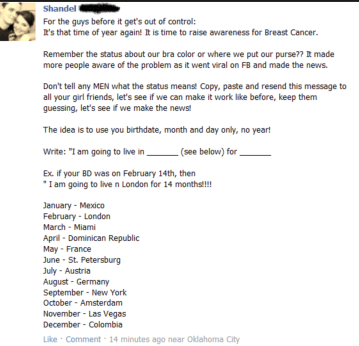
Screen Shot 2018-10-28 at 7.09.58 PMYears ago Facebook became one of the ways of spreading awareness during National Breast Cancer Awareness month. This was done by sending private messages to women to create status posts with certain requirements. An example of a post was, women were to post their name and the color of their bra.  Their status would read something like: “Melissa, beige”, or “Rebecca, red”. Another example was women were to insert where they like to keep their purse, into the statement, “I like it ____”.  The post would read something like, “I like it on the kitchen island”. Perfectly innocent, however, risqué.
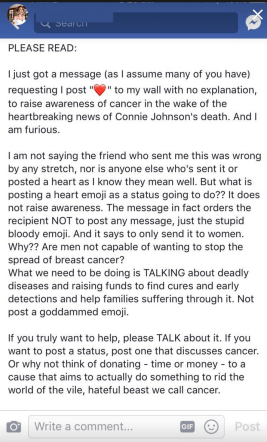
People like for others to know they are associated with good causes or charities, and on social media these emotional appeals spread and become viral quickly. All was well in the fun of spreading breast cancer awareness. These posts prompted women to post on their wall, and they knew it was National Breast Cancer Awareness month. Cyberactivism worked! Or did it?

What Went Wrong

Screen Shot 2018-10-28 at 7.07.32 PM copyThere was no call to action, and there was no explanation for those that did not receive the private messages. While there were a lot of women that did receive the National Breast Cancer Awareness private messages, there was no information for them to learn about the importance of routine checkups, or to get involved in any other way.

Some people were a bit annoyed that men were intentionally excluded. The private messages specifically requested women not to respond to men who inquired about the post. While the posts created a buzz throughout Facebook, it did nothing to include men, who are susceptible to breast cancer as well. And, it did nothing to publicly support or promote breast cancer awareness.

How to Make it Better

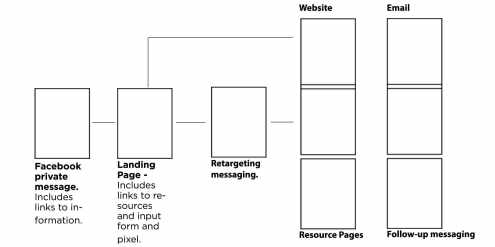
Creatively convincing people to post to their Facebook wall is fantastic! However, if there had been real-world action and dissemination of valuable information, it would have been better! If the strategy had involved a process such as sending a private message to women that included specific information regarding breast cancer with a link to a landing page containing specific information, a form to donate to a breast cancer charity, access to information and resources, along with ways to get involved in their specific location, it would have been phenomenal. The landing page could have had a retargeting pixel that served up additional information or messaging throughout Breast Cancer Awareness month.

The strategy could have extended to include men, by sending a private message to them when they had asked about the women’s posts. This private message could have requested men to post something specific on their wall, further extending the messaging privately while including important information regarding male breast cancer with a link back to a landing page specific to male breast cancer information, a form to donate, access to resources and ways to get involved in their communities to support breast cancer awareness. A retargeting pixel could have been included on the male landing page that would allow for additional specific information and messaging regarding breast cancer in males.

strategy

This process calls for action, provides an opportunity to donate, and allows to privately disseminate vital information about breast cancer, while extending the messaging all month long. Participants could share the retargeting messages, even further extending the campaign’s reach. In providing an input form on the landing page, organizations could have been able to collect contact information for additional email messaging thereafter.

Take Action

Cancer is no laughing matter. Breast Cancer is #UNACCEPTABLE. Learn more about breast cancer and how you can take action at: komen.org

Your social engagement is greatly appreciated!

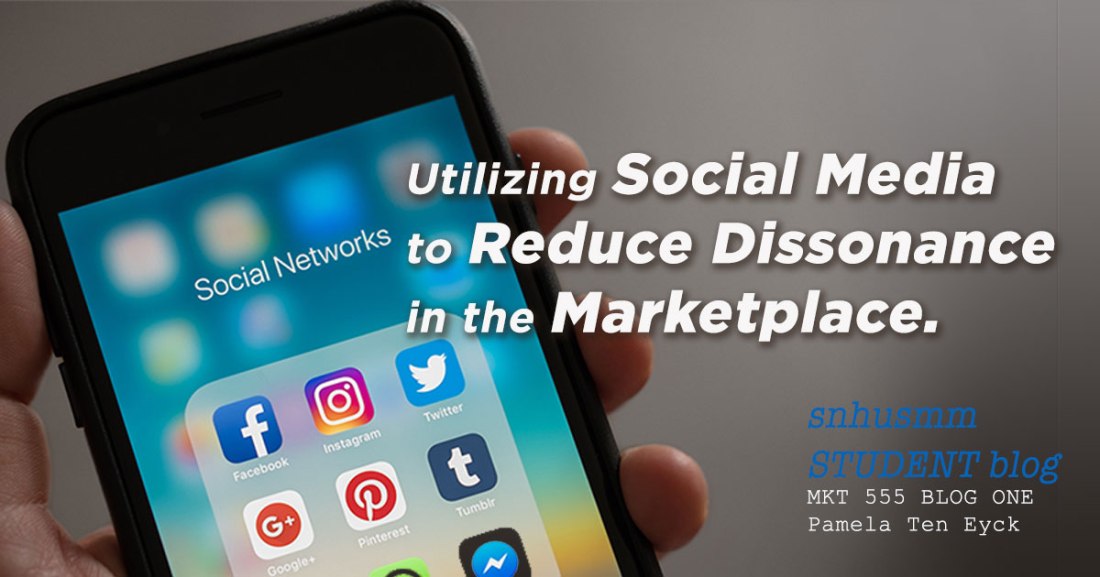
Bridging the Gap – Utilizing Social Media to Reduce Dissonance in the Marketplace

SNHU MKT 555 Blog One
Pamela Ten Eyck

glassesNew online companies are a dime a dozen. Why do consumers trust doing business with companies they know nothing about? In a world of technology, conveying who you are or what you do could be tricky at best.  Anyone can put anything on the internet…it doesn’t make it true, or trustworthy.  So, when launching a new business that will deliver quality products that can’t be found anywhere but online, how does a company build trust?  How does a company convey who they are, what they do, that they are trustworthy, and become a company that consumers choose to do business with?  How do they bridge the Gap?

Defining the Gap

Warby Parker is an online distributor of prescription eyeglasses and sunglasses.  Yes, online.  There are no retail locations or showrooms. Consumers make their purchases through a website only.  This was an entirely new way of selling prescription glasses and there were concerns!

Concern #1:  Eyeglasses are far too important of a decision to buy online.
Concern #2:  Low pricing could be perceived a lesser quality.
Concern #3:  Consumers couldn’t try them on.
Concern #4:  Consumers had no idea if Warby Parker was a reputable company.

Warby Parker, being the innovators they are, chose to utilize the internet and largely social media to bridge the gap, reducing dissonance in the purchase and distribution of prescription eyeglasses and sunglasses online.

Bridging the Gap

Why social media? By utilizing social media, Warby Parker was able to communicate directly with consumers where they were able to build trust, and direct messages that changed the narratives, creating a relationship, a broader online community, and develop the character of the company. Social media reduced the dissonance in the new prescription glasses industry.

The Value in Community

Warby Parker was able to address consumer concerns, and direct their messaging, while building an online community that then supported and promoted Warby Parker in a more powerful way than traditional marketing channels.

Addressing Warby Parker Concerns

Concern #1:  Eyeglasses are far too important of a decision to buy online.
Concern #2:  Low pricing could be perceived a lesser quality.
Concern #3:  Consumers couldn’t try them on.

Warby Parker addressed the top 3 concerns with their “Home Try-On Campaign” by allowing customers to order five pairs of glasses to try on at home. Customers could then choose which they liked best and return the other four pairs at no extra charge.

smallCustomers were able to address their concerns regarding quality, selection, and were able to try their choices on. This reduced the perceived risk in working with an online distributor with little or no history. Essentially, customers were in charge of their entire purchase. It was up to Warby Parker to deliver a quality product with no hassle, direct to consumers.

Concern #4:  Consumers had no idea if Warby Parker was a reputable company.

In consistently utilizing social media, Warby Parker created engaged two-way  communication with its customers, building trust and loyalty along the way. Warby Parker also routinely encourages customers to post pictures of themselves wearing their new glasses, thereby extending Warby Parker‘s reach. This also created user-generated content that Warby Parker could reuse and share.

Warby Parker was also able to convey more about who they are as a company by utilizing a social good initiative within their marketing. Warby Parker donated a pair of glasses to a person in need for every Warby Parker purchase.

Companies enjoy the benefits when their customers share about their products, experiences, etc. via social media. Consumers help reduce dissonance in the marketplace by posting and sharing their own experiences online. Word-of-mouth advertising and customer support of a product is the most trusted form of advertising, and social media is the most readily and extensive resource available today.

Find Warby Parker at:  https://www.warbyparker.com/
On Facebook at:  @WarbyParker
On Twitter at: @WarbyParker

Learn more about the SNHU MS in Marketing!

Social Media Photo by Tracy Le Blanc from Pexels

Enter your contact information to be included on the email list.

← Back

Thank you for your response. ✨