Case Study: Orkut
Pamela Ten Eyck
SNHU MKT 555
Orkut! Have you ever heard of it? Here is a bit of background—Orkut was a social media platform created by a Google employee named Orkut Buyukkokten. It was wildly successful in Brazil, and was available from 2004 – 2014 as an invite only platform.
Being created by Google, Orkut was a trusted platform and was widely utilized within the technology community. The Orkut platform was clean and simple, giving users the ability to connect with friends and digital communities, and rate products and services. Within a year of its launch, 1,500,000 digital communities could be found on Orkut , and in 2012 Orkut had 30 million users.
SUCCESS OR FAILURE?
 One could conclude it a success as a digital community platform since it allowed it’s users to connect and share insights to products and services, engage with brands, and connect with resources to further engage within the digital communities available on the Orkut platform.
The Orkut platform became available at a very early time in relation to social media and what it offers today, or rather in 2014. Today, one could also conclude Orkut’s demise as a digital community platform that outgrew its technology. The Orkut platform didn’t play well with online videos and photos, and it limited the number of friends a user may have. Orkut also had functionality problems with its website and possible content blockages.
SO, WHAT HAPPENED?
Essentially, when Orkut began to fail its audience’s expectations, Orkut lost their audience. Orkut performed very well for what it was developed for. However, at the time it was developed, technology was nowhere near where it was in 2014 when Orkut was shut down.
COULD IT HAVE BEEN DIFFERENT?
Orkut was excellent platform during its time in providing its audience the ability to engage. This assisted in delivering marketing messages directly to their intended audiences, and created an experience to increase awareness. These interactions help amplify loyalty to brands, products and services by increasing interactions.
 When other platforms provided new ways to engage audiences that out-performed the Orkut platform, audiences shifted to the more engaging platforms. The Orkut Case Study relates the importance of listening. Had Orkut listened to its audience, it may have been better able to plan to set goals in consideration of the utilization of technology in culture and society.
SOCIAL MEDIA SUCCESS OR FAILURE?
Orkut is both a success and failure…however, a success overall. Orkut is an example of what technology may provide when it is developed to fulfill a need. The internet is constantly changing, meaning technology and culture are constantly changing. It is imperative to listen to the audience, and be aware of industry changes in order to consistently meet their expectations. Otherwise, just like Orkut, your product, service, or platform may become obsolete.


 As any platform may have success in providing a plethora of desired services, there are always limits. While users from different backgrounds may choose to individualize their social media to their preferences, the application itself may be the constraint when crossing over into additional audiences. The user interface may not be as intuitive for audiences of different societies, or cultures. There may be differences in what one audience may find entertaining, or beneficial within an application. There must always be consideration of the intended audience, or audiences to achieve the desired success.
 Could Weixin be successful in other countries? In theory, yes it could! However, it might meet resistance in other markets. Many considerations must be made regarding current culture and trends. It would be difficult to break in to cultures that are already using applications such as Twitter, Instagram, and Facebook. Weixin would have to understand the motivations of their intended users within other cultures to achieve the success that they currently have within their current markets.
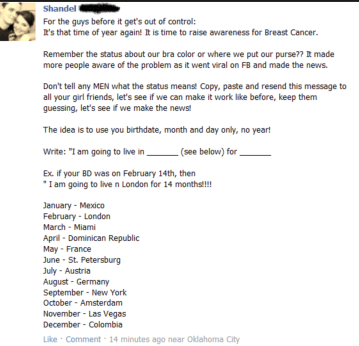 Years ago Facebook became one of the ways of spreading awareness during National Breast Cancer Awareness month. This was done by sending private messages to women to create status posts with certain requirements. An example of a post was, women were to post their name and the color of their bra. Their status would read something like: “Melissa, beige”, or “Rebecca, red”. Another example was women were to insert where they like to keep their purse, into the statement, “I like it ____”. The post would read something like, “I like it on the kitchen island”. Perfectly innocent, however, risqué.
 There was no call to action, and there was no explanation for those that did not receive the private messages. While there were a lot of women that did receive the National Breast Cancer Awareness private messages, there was no information for them to learn about the importance of routine checkups, or to get involved in any other way.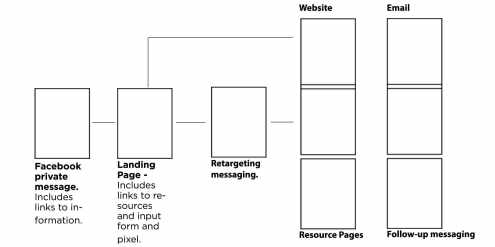




 Pamela Ten Eyck